Flower Vase Embroidery Design: A Maker’s Review
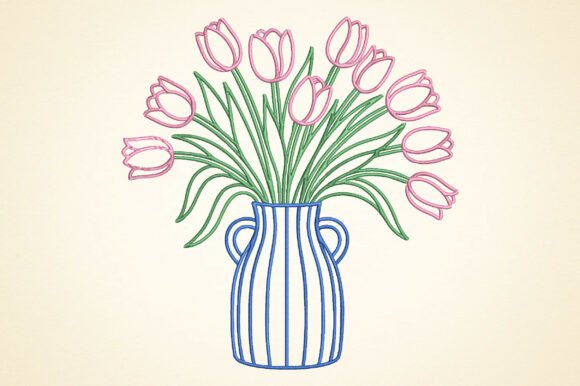
When evaluating a new machine embroidery design for my studio, I look past the digital preview and imagine the needle hitting fabric. The Flower Vase Embroidery Design immediately caught my attention because it balances aesthetic appeal with practical stitchability. Featuring delicate tulips arranged in a stylish striped vase, this design combines minimalist line art with just enough structure to hold its own on various textiles. As someone who produces both custom client work and small-batch retail items, I need designs that are versatile, durable, and visually distinct. This review breaks down how this specific floral motif performs in real-world production scenarios, from hoop selection to final product presentation.
First Impressions and Visual Personality
The mood of this design is undeniably fresh and elegant. Unlike heavy, dense botanical patterns that can feel stiff or dated, the outline flowers approach here feels modern and airy. The interplay between the organic curves of the tulips and the geometric precision of the striped vase creates a visual rhythm that is pleasing to the eye. For an Etsy seller or boutique owner, this balance is crucial. It reads as sophisticated rather than juvenile, making it appropriate for adult custom apparel as well as nursery decor.
From a technical standpoint, the line art style suggests a lower stitch count compared to full-fill florals. This is a significant advantage for production speed and fabric drape. However, minimalism leaves no room for error. Every running stitch and satin stitch must be intentional. In my initial assessment, the design appears optimized for clarity, avoiding tiny gaps or overlapping threads that often plague poorly digitized outline work. The striped vase serves as an excellent anchor, providing a stable base that helps register the lighter floral elements accurately during stitching.
Real-World Application: The Linen Tote Test
To truly judge the viability of this embroidery file, I mentally placed it in a current project workflow: creating premium linen tote bags for a spring market collection. Totes are high-traffic items that require durable embroidery. The Flower Vase Embroidery Design fits the vertical orientation of a standard tote panel perfectly without overwhelming the negative space.
In this scenario, the minimalist line art allows the natural texture of the linen to show through, which adds value to the handmade product. Customers looking for eco-friendly, artisanal goods often prefer designs that complement the fabric rather than covering it completely with plastic-like thread coverage. The tulip motif offers a recognizable seasonal hook for marketing, while the vase element grounds the composition so it doesn't look like a floating sticker. For a craft business, this design bridges the gap between trendy and timeless, ensuring the inventory remains sellable beyond a fleeting micro-trend.
Fabric Compatibility and Stabilizer Strategy
While the design is versatile, its performance depends heavily on your substrate choice. Because it utilizes line art techniques, stabilization is non-negotiable.
- Cotton and Linen: These are ideal partners for this design. The tight weave supports fine lines, and the matte finish of the thread contrasts beautifully against the natural fibers. Use a medium-weight cutaway or tear-away stabilizer depending on the fabric weight.
- Stretchy Knits and Sweatshirts: Proceed with caution. Minimalist lines can distort easily on unstable knits. If using this for sweatshirt embroidery, you must use a fusible no-show mesh stabilizer and potentially a light spray adhesive to prevent shifting. Test the tension first; if the fabric puckers, the delicate tulip stems will look wobbly.
- Sheer or Lightweight Fabrics: The open nature of the design makes it suitable for baby clothes or sheer curtains, but only if the stitch density is verified. Ensure there are no heavy jump stitches that could snag. For baby embroidery, always check the back of the design for scratchy knots or trims.
- Textured Surfaces: Avoid terry cloth or deep-pile fabrics unless you use a water-soluble topping. The fine details of the striped vase will get lost in the nap, ruining the crispness of the artwork.
Navigating Hoop Sizes and Placement Challenges
One critical consideration for any digital embroidery file is scaling. Before purchasing or stitching, verify the native size and recommended minimum dimensions. Reducing a line art design too much can cause satin stitches to become thin running stitches, leading to fraying and breakage. Conversely, enlarging it excessively may reveal gaps in column widths if the digitizer did not account for expansion.
For curved surfaces like caps, this design requires careful evaluation. While the vertical aspect ratio suits a cap front, the rigid geometry of the striped vase might highlight distortion caused by the curve. I would recommend testing this on a scrap cap or sticking to flat embroidery projects like patches or pillow covers until you confirm the registration holds up on a 3D surface. If creating an embroidered patch, ensure the border definition is strong enough to withstand cutting and merrowing after the design is stitched.
Commercial Viability and Customer Perception
For makers selling finished goods, trust is built through consistency and quality. The Flower Vase Embroidery Design contributes to a professional brand image because of its clean execution. When photographing products for listings, the high contrast of line art photographs exceptionally well, even in mobile thumbnails. This aids buyer engagement significantly.
However, commercial use extends beyond physical goods. If you plan to use this design for printable mockups or digital assets, check the licensing terms explicitly. Some designers allow physical sales but restrict digital distribution. Always confirm whether the license covers commercial embroidery for mass production versus limited handmade runs. Understanding these boundaries protects your shop from infringement issues and maintains ethical standards within the maker community.
Essential Designer Notes for Success
Before committing this design to a final personalized gift or retail item, run through this practical checklist to ensure professional results:
- Test Stitch First: Never skip the test run. Use a scrap piece of your exact project fabric and stabilizer combination. Inspect the alignment of the vase stripes and the smoothness of the tulip petals.
- Thread Color Contrast: Line art relies entirely on visibility. Test thread colors against your fabric in natural light. A pale grey thread on white cotton may disappear in photos or dim lighting. High contrast ensures the design pops.
- Review Stitch Density: Open the file in your editing software or viewer. Check for areas where stitches might be too dense for lightweight fabrics or too sparse for durability. Adjust pull compensation if necessary for your specific machine.
- Mockup Validation: Create a black and white version of your product mockup. If the design loses its impact without color, it may rely too heavily on hue rather than form. Strong silhouettes sell better.
- Wash Testing: If this is intended for kitchen towels or holiday embroidery on garments that will be laundered frequently, wash and dry your test swatch three times. Check for thread shrinkage or fabric tunneling around the vase outline.
- Licensing Confirmation: Re-read the terms regarding small shop product limits. Document your permission to sell derived works to avoid future disputes.
Final Thoughts on Versatility
The Flower Vase Embroidery Design stands out as a reliable asset for the serious embroiderer. It avoids the trap of being overly complex while maintaining enough character to serve as a standalone focal point. Whether you are embellishing a tea towel, branding a boutique tote, or creating a sentimental holiday gift, the combination of floral softness and structural geometry offers broad appeal. By respecting the technical requirements of line art and validating the design against your specific materials, you can transform this digital file into a tangible product that reflects true craftsmanship. Remember, the best design assets are those that not only look beautiful on screen but survive the reality of the needle, the wash cycle, and the customer's daily life.