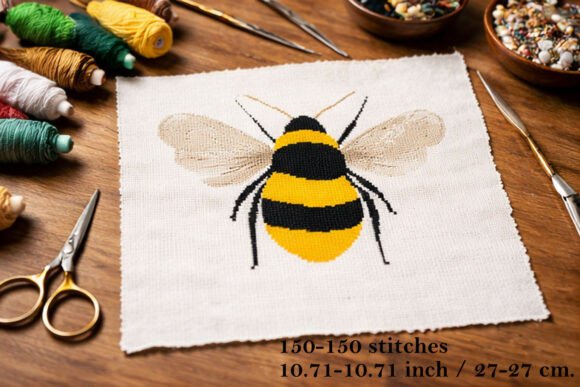
Bee Cross Stitch Pattern 10 I: Apparel Design Review
As an embroidery designer constantly scouting for fresh aesthetics for boutique apparel, finding the right balance between traditional charm and modern wearability is essential. When evaluating Bee Cross Stitch Embroidery Pattern 10 I for a potential sweatshirt and hoodie collection, my primary focus is how this digital scheme translates from a static image to a textured, wearable garment. This review explores the practical application of this design for creative entrepreneurs, Etsy sellers, and small clothing brands looking to expand their custom apparel offerings with nature-inspired motifs.
Visual Personality and Boutique Aesthetic
The first impression of Bee Cross Stitch Embroidery Pattern 10 I is one of rustic elegance mixed with playful nostalgia. Unlike hyper-realistic machine embroidery designs that rely on satin stitches and complex fills, this cross stitch scheme offers a pixelated, handcrafted texture that is currently trending in the slow fashion movement. The visual mood feels inherently cozy and artisanal, making it an excellent candidate for lifestyle brands that emphasize handmade quality.
For a boutique brand, this design carries a feminine yet gender-neutral appeal when scaled correctly. It avoids being overly cutesy, leaning instead toward a classic cottagecore or vintage naturalist aesthetic. This versatility allows the design to work across various demographics, from Gen Z thrift-flip enthusiasts to millennials seeking sustainable, unique wardrobe staples. The decorative strength lies in its simplicity; it does not compete with the garment but rather enhances the fabric texture, creating a premium feel that mass-produced graphics cannot replicate.
Strategic Placement on Sweatshirts and Hoodies
When planning a collection around Bee Cross Stitch Embroidery Pattern 10 I, placement is just as critical as the design itself. For oversized sweatshirts and hoodies, this pattern performs exceptionally well in specific zones:
- Center Chest: A centered placement creates a bold statement piece. However, because this is a 10-inch needlework scheme, verify the final stitch dimensions against your garment size. On an oversized hoodie, a larger scale maintains visual weight, whereas on a fitted women’s sweatshirt, you may need to adjust the scale to prevent distortion across the bust line.
- Sleeve Accents: The linear or grid-based nature of cross stitch patterns often adapts beautifully to sleeve placements. Running a portion of the bee motif down the forearm adds high-perceived value to custom apparel without requiring massive hoop sizes.
- Back Yoke or Hem: For a subtle boutique touch, placing the design near the bottom hem or upper back yoke offers a surprise detail that encourages social media sharing and customer engagement.
It is vital to remember that while the product description highlights a 10-inch needlework digital file scheme, apparel decorators must confirm the actual stitch count and physical dimensions before production. A 10-inch cross stitch design can be incredibly dense; ensuring your machine and hoop size can accommodate the full width without excessive re-hooping is crucial for professional results.
Fabric Compatibility and Stabilizer Strategy
Cross stitch patterns behave differently than standard machine embroidery files. The structured grid of Bee Cross Stitch Embroidery Pattern 10 I requires stable ground to prevent puckering, especially on stretchy apparel fabrics. When testing this design for t-shirt embroidery or lightweight denim jackets, I recommend using a medium-weight cutaway stabilizer permanently fused to the fabric. Tear-away stabilizers often fail to support the repetitive tension of cross stitches, leading to warped designs after washing.
For fleece and ribbed sweatshirt fabrics, the texture of the material can sometimes swallow fine details. In these cases, consider using a water-soluble topping to keep the stitches crisp and visible. Dark garments present another challenge; ensure your thread colors provide sufficient contrast against black or navy bases. The PDF and JPG legend included with this digital download will be invaluable here, allowing you to pre-select thread colors that pop against darker apparel before threading your machine.
Commercial Viability for Etsy Sellers and Small Shops
For Etsy sellers and small shop owners, Bee Cross Stitch Embroidery Pattern 10 I offers significant commercial potential beyond just the finished garment. The included JPG and PDF files serve dual purposes. First, they act as your production guide. Second, high-resolution scheme images can be utilized for printable mockups and listing photos before you even stitch a sample. This reduces upfront sampling costs and allows for faster market testing.
However, professional presentation requires due diligence. Before listing any finished product derived from this Creative Fabrica embroidery asset, you must review the specific licensing terms attached to the download. Confirm whether commercial use of the finished physical product is permitted and if there are any restrictions on digital redistribution. Buyer trust hinges on transparency; clearly stating "embroidered from licensed digital pattern" in your product descriptions can enhance brand integrity and protect your business.
Designer Notes: Testing Before Production
Never run a new design directly onto a sellable garment. My protocol for integrating Bee Cross Stitch Embroidery Pattern 10 I into a production line includes several non-negotiable testing phases:
- Scrap Fabric Test: Always stitch out on a scrap of the exact garment material you intend to sell. Fleece, cotton jersey, and French terry all react differently to stitch density.
- Stabilizer Audit: Test at least two different stabilizer combinations. Check the back of the test stitch-out for tunneling or excessive bobbin thread visibility.
- Wash Test: Cross stitch can relax or tighten after laundering. Wash and dry your test swatch using the care instructions you plan to provide to customers to ensure the design holds up.
- Scale Verification: Measure the stitched output against the digital scheme. Ensure the aspect ratio hasn't shifted during digitizing or resizing.
- Thread Contrast Check: View the test stitch-out in natural light and flash photography to simulate how it will appear in lifestyle product photos and online listings.
Elevating Brand Identity Through Needlework
Incorporating Bee Cross Stitch Embroidery Pattern 10 I into your catalog signals a commitment to detailed craftsmanship. In a market saturated with direct-to-garment printing, textured needlework stands out. It communicates tactile quality through a screen, increasing perceived value and justifying higher price points for boutique apparel.
This design also supports visual consistency across a collection. Because cross stitch relies on a grid, it pairs seamlessly with other geometric or pixel-art style graphics, allowing you to build a cohesive seasonal line. Whether applied to tote bags for accessory upsells or featured as the hero image on a cozy seasonal outfit, this pattern bridges the gap between traditional craft and contemporary fashion.
Ultimately, success with this digital embroidery file depends on respecting the technical requirements of cross stitch on apparel. By carefully managing stabilizer choices, verifying dimensions, and leveraging the provided legends for color accuracy, creative entrepreneurs can transform Bee Cross Stitch Embroidery Pattern 10 I from a simple digital download into a signature element of a profitable, professional clothing brand. Always prioritize testing and license compliance to ensure your handmade products remain both beautiful and commercially viable.